
Moving away from United States (US) dominated big tech has been a conversation simmering in boardrooms, developer communities, and data centers for a while. The same way hardware manufacturers quietly worry about the global over reliance on Taiwan Semiconductor Manufacturing Company (TSMC) for chips, many in the tech work recognise an uncomfortable truth: most of the digital infrastructure used for; global enterprises, small businesses or our personal lives, sits in the hands of a handful of American giants. From the cloud services that sustain lots of enterprise logistics to the social apps that shape our communication, so much of our digital existence flows through servers governed by one nation. Even the US economy itself leans heavily on this concentrated cluster of companies, creating a circular dependency that fuels both innovation and fragility, that is before we even start the question around Artificial Intelligence (AI) and all the actual circular deals going on there that are making each company involved seem like it is having record growth (I’ll save the AI specific talk for a separate post).
At the start of 2025 this conversation really picked up and now going into 2026 I can’t see anything but this striving much further forward as we head towards large shifts on multiple fronts.
Why The Move Matters
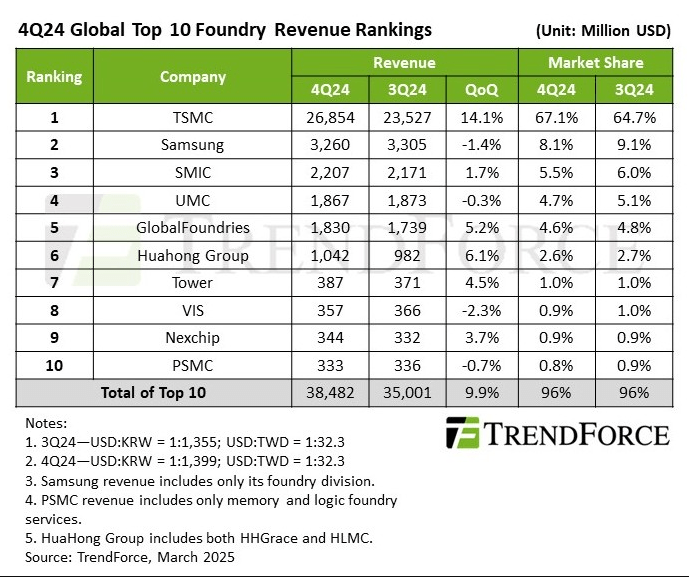
Moving away from US dominated big tech is starting to look like a genuine strategic concern, well at least for businesses, maybe not for personal use…..yet. At the hardware level, the dependence on TSMC is a perfect illustration of what “all the eggs in one basket” looks like. TSMC controls roughly two thirds of the global contract chip manufacturing market, with estimates around 65-67% in late 2024, far ahead of Samsung and all other competitors combined. What TSMC outputs isn’t just anything, it is outputting the leading-edge processors that power iPhones, Nvidia GPUs, AMD CPUs, the list just goes on. When you combine technical dominance with increasing tension in the Taiwan Strait and open discussion in policy circles about the risk of a military move by China, you get a very uncomfortable reality: a large part of the world’s digital and industrial economy hinges on a few miles of silicon production on a heavily contested island.
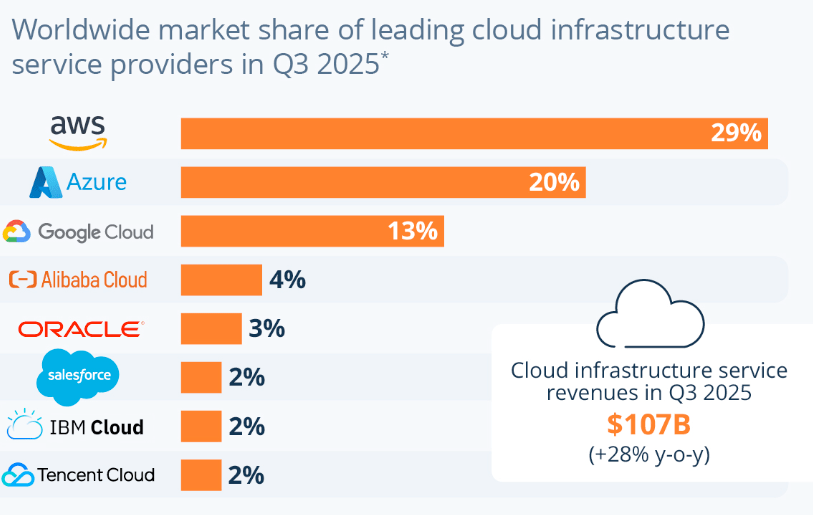
At the software and services layer, the pattern repeats itself in a way that is far more visible in everyday life. On the personal side; email, storage and productivity is heavily concentrated in the hands of a few major US platforms. Outlook (around 400 million users as of late 2024) and OneDrive under Microsoft, Gmail (around 1.8 billion users as of 2025) and Google Drive under Google which both serve vast numbers of users across the world. In enterprises, Microsoft 365 and Google Workspaces are the key players in cloud productivity. Then if we look at infrastructure the big three US cloud platforms Amazon Web Services (AWS), Microsoft Azure and Google Cloud Platform (GCP) capture most of the global cloud spend.
We have only talked about the background stuff. When it comes to media and consumer services we can continue to paint this over reliance on US tech picture. Streaming video and audio is largely dominated by US tech as well, Netflix, Amazon Prime Video, Apple Music, and then the platforms almost everyone with a smart phone has; Instagram, Facebook, WhatsApp, YouTube. The phone we access these platforms through is most likely running iOS (Apple) or Android (Google).
Is this picture clear yet? At almost every layer for both business and personal life, some part of it will get routed through US based commercial/political jurisdiction, whether by intention or not.
Lets take this one step further. What makes this more than just a nerdy supply-chain observation is the way foreign policy, security doctrine and tech power have become tightly coupled. The current US administration has taken a national-interest framing of economic and technology policy, from sanctions and export controls through to energy and resource questions, and their recent actions within Venezuela. The 2025 US National Security Strategy classified the advanced chips mentioned earlier and technology (infrastructure and digital platforms) as some of the key strategic assets and the doctrine speaks of securing supply chains and preserving technological advancements.
The EuroStack Initiative
EuroStack is framed as a blueprint for a more sovereign European digital stack, and the 2025 white paper “Deploying the EuroStack: What’s needed now” sets out a very clear message. It argues Europe needs won’t be able to close its competitive gap or reduce dependency on the US big tech companies within a very deliberate shift in demand and capital towards European providers with emphasis on openness that is embedded into the entire ecosystem.
The heart of the white paper has the following 4 simple pillars:
- Buy European
- Sell European
- Fund European
- Embrace Openness
Read the full paper (after finishing this post of course):
The Rise of Self Hosting
I have been a self-hoster for a long time. It started the way it does for a lot of tech enthusiasts with a Raspberry Pi. For me, specifically it was a Raspberry Pi 4 (what a great birthday present that turned out to be). With the Pi 4, an afternoon of tinkering and a simple goal of “my files should be my files” I embarked on the start of my self hosting journey. I found a guide to get Nextcloud up and running, pointed my phone, laptop and desktop computer at this little box in the corner of my room and as if by magic my files no longer needed to sit in Google or Microsoft data centers, rather they can sit on a mini server a few meters away. That one small win opened Pandora’s box. Since then the stack has grown into a full-blown homelab. Nextcloud remains, but it is now joined by things like; Gitea for code, VaultWarden for passwords, n8n, ansible and terraform for automation, Grafana, Prometheus, Loki and Grafana Alloy for metrics and log collection and Calibre Web for books. I am not saying that you have to host all these services, however, even getting some simple compute and getting a few up and running will be a great way to learn and explore different technologies outside of just relying on those big US tech providers. Realistically, the simpler the better, as for most people you don’t want to turn your spare time into being a systems engineer at home, so there is no need to over complicate self hosting, it is mainly there to provide you flexibility and choice.
In a small way, this self hosting story is the same as what is playing out at national and regional levels with digital sovereignty and privacy. Individuals trying to own their infrastructure at home while Europe, through things like the EuroStack Initiative, tries to do the same at a continental scale.
Linux Embedding into Everyday Life
Running Linux as a main desktop used to sound scary, at least if you believed the keyboard warriors on Reddit, but in 2026 the out-of-the-box experience on modern distributions is quietly better than what Windows is offering for a lot of people. Flatpak and similar packaging formats have made installing apps a breeze, Wayland is finally in a place where everyday use feels smooth rather than experimental, and polished distributions like Fedora Workstation, Mint, Ubuntu and Pop! Operating System (OS) give you slick defaults without spending a weekend in the command line. Fedora was my own turning point, after trying Ubuntu multiple times over the years on a spare laptop, it was Microsoft’s Recall announcement in May 2024 that pushed me over the edge and made me switch my main machine to Fedora Workstation, and I have not looked back since. You might ask why Fedora as the main distribution and its purely habit sake, by the time I switched my desktop experience I was already running my homelab and I used Fedora Server Virtual Machines (VMs) for a lot of the services I ran because I liked working with RedHat based distributions. Gnome (the desktop experience within Fedora Workstation) got me through that first leap with a clean, focused workflow, but over time I have found myself wanting more customisation and a slightly different mental model, which is why I am now exploring Fedora KDE Plasma. Gnome provides a great out-of-the-box enterprise ready experience, Plasma leans into tailoring your environment around how you think and work and with the hardware usage of both Gnome and KDE Plasma being closer than ever I thought it would be a good time to continue my exploration journey.
Even if it doesn’t show up on your desktop, you are almost certainly bumping (digitally) into Linux everyday. It quietly powers a large chunk of the internet from, servers to cloud platforms and backend services that keep modern apps running. It is also the OS at the heart of Android phones, routers, smart TVs, streaming boxes and car infotainment systems. Chances are Linux has been part of your daily life for years without you ever noticing.
From a wider lens, this is not just a quirky personal or tech enthusiast choice. Desktop market share charts over the last few years show Windows steadily losing ground while Linux slowly but consistently creeps upward, and Steam’s own hardware surveys now regularly show Linux gaming usage in the low single digit percentages where it once barely registered at all.

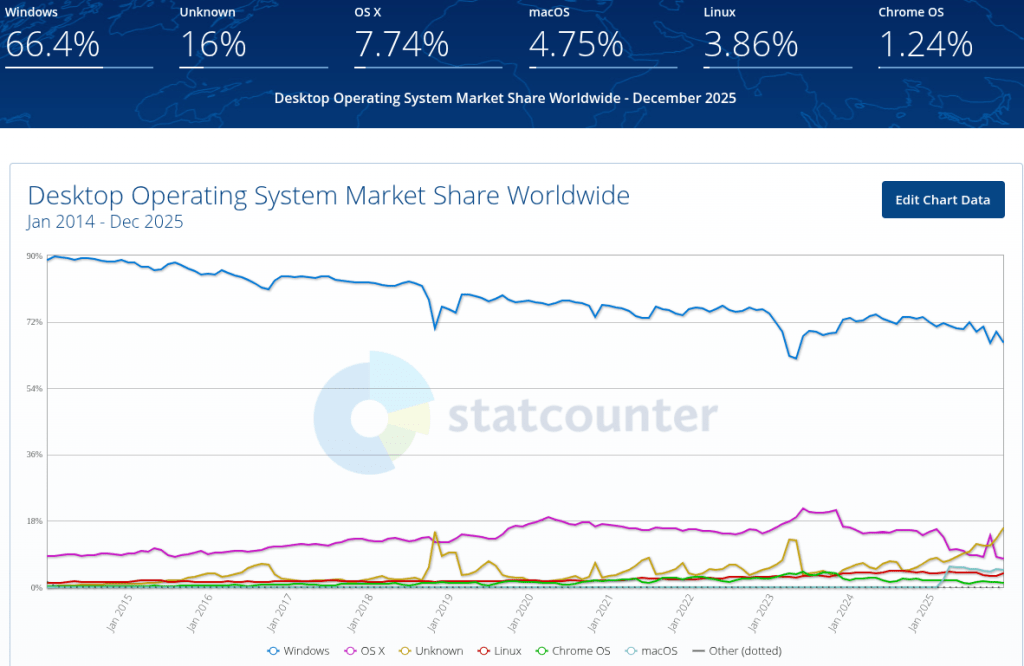
We are now at the point where Linux has dedicated distributions that are gaming ready if that is what you need, or the average Linux distribution is more than capable of handling everyday productivity tasks with ease. Windows is going from the default to a conscious decision. What really changed is that, post-Windows 10 (which was classed end of life as of October 2025), people are not just shrugging their shoulders and accepting the next version without any thought. Windows 11 is bringing stricter hardware requirements, making perfectly fine hardware considered obsolete, telemetry and data collection concerns, in OS advertisements and a major push into Microsoft’s cloud based services so they can entice you into more monthly subscriptions. All that put together and I think 2026 will see the continued growth of the Linux desktop market share.
The combination of a more mature ecosystem, better app distribution, and stable desktop environments means running Linux on your desktop today feels less like a hobbyist project and more like a deliberate step towards owning a bit more of your computing life.
The Bigger Picture
The shift I have talked about in this post is not as an anti-American gesture, but as a pragmatic response to an internet/world that has become uncomfortably centralised in one regulatory and geopolitical sphere, and as an invitation to invest in regional clouds, self hosting and open technologies that spread risk instead of concentrating it. It is not just about one thing either, this shift in mindset and culture is about people and organisations choosing to be a part of a broader movement towards resilience and long term autonomy rather than purely prioritising convenience.
Go and explore the EuroStack Project Directory, the Open Source Directory, and other open data sources that have lots of great projects and initiatives, to try out or even become a part of:
- https://euro-stack.com/
- https://www.ossdirectory.com/en/home
- https://thehomelab.wiki/books/helpful-tools-resources/chapter/awesome-selfhosted
References & Other Reading
Why The Move Matters:
- https://patentpc.com/blog/tsmc-samsung-and-intel-whos-leading-the-semiconductor-race-latest-market-share-data
- https://semiwiki.com/forum/threads/tsmc-market-share-tops-67-in-q4-advisory-firm.22327/
- https://www.visionofhumanity.org/the-worlds-dependency-on-taiwans-semiconductor-industry-is-increasing/
- https://clean.email/blog/email-providers/outlook-statistics
- https://clean.email/blog/email-providers/gmail-statistics
- https://www.statista.com/chart/18819/worldwide-market-share-of-leading-cloud-infrastructure-service-providers/
- https://www.whitehouse.gov/wp-content/uploads/2025/12/2025-National-Security-Strategy.pdf
EuroStack Initiative:
Linux Embedding into Everyday Life:
- https://gs.statcounter.com/os-market-share/desktop/worldwide/#monthly-201401-202512
- https://store.steampowered.com/hwsurvey/Steam-Hardware-Software-Survey-Welcome-to-Steam
- https://byteiota.com/linux-gaming-hits-3-2-on-steam-market-share-milestone-2026/
- https://www.pcgamer.com/software/linux/im-brave-enough-to-say-it-linux-is-good-now-and-if-you-want-to-feel-like-you-actually-own-your-pc-make-2026-the-year-of-linux-on-your-desktop/
- https://www.getsupport.co.uk/blog/2024-07/what-is-microsoft-recall-and-why-is-it-causing-controversy/
The Bigger Picture:
 Knowledge Addict
Leave a comment